
Music programs for memory care, senior living, and special needs communities where participants who are usually withdrawn become visibly engaged — and stay calmer for hours afterward.
SCHEDULE FREE CONSULTATION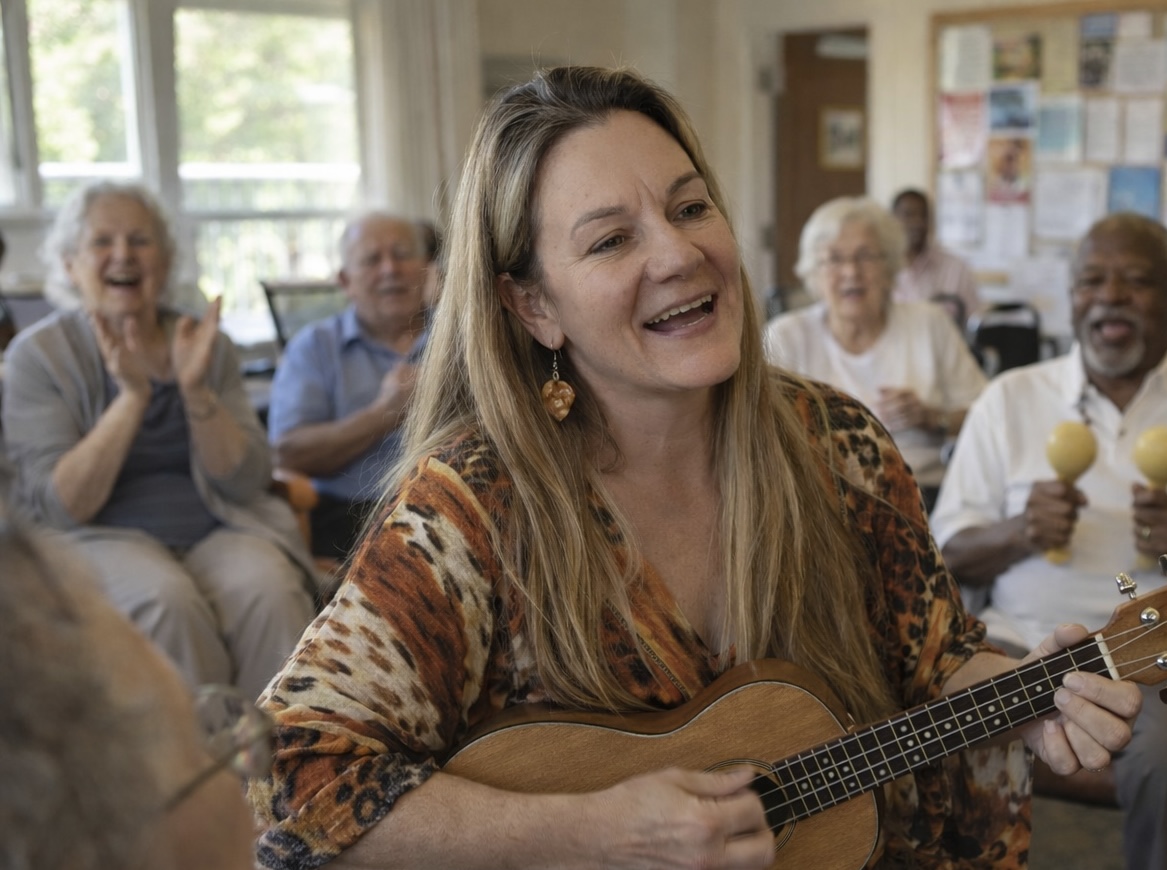
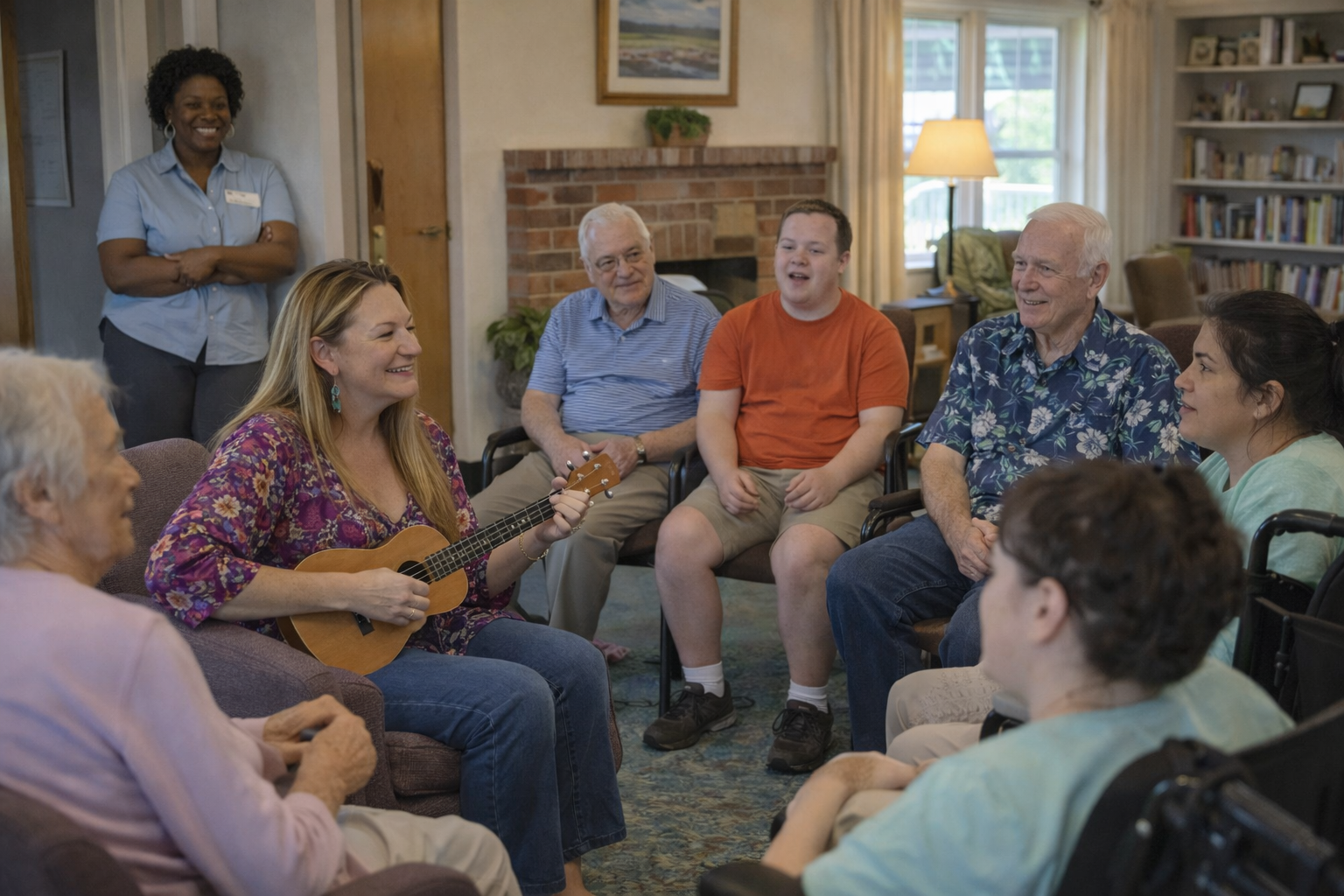
Participants who are typically disengaged actively participating and smiling
Melanie Stark, M.Ed. — After 25+ years working with neurodivergent populations, I notice what others miss. The slight tension before someone gets agitated. The micro-expression that says they're overwhelmed. The exact moment someone's breathing deepens and they relax.
This isn't just observation — it's how my brain works. I adjust the tempo, volume, and energy in real-time to match what participants need. That's why staff tell me residents stay calmer and more social for hours after sessions end.
"After Melanie's sessions, my residents are visibly calmer and more engaged with each other. It's like she gives them — and us — a reset."
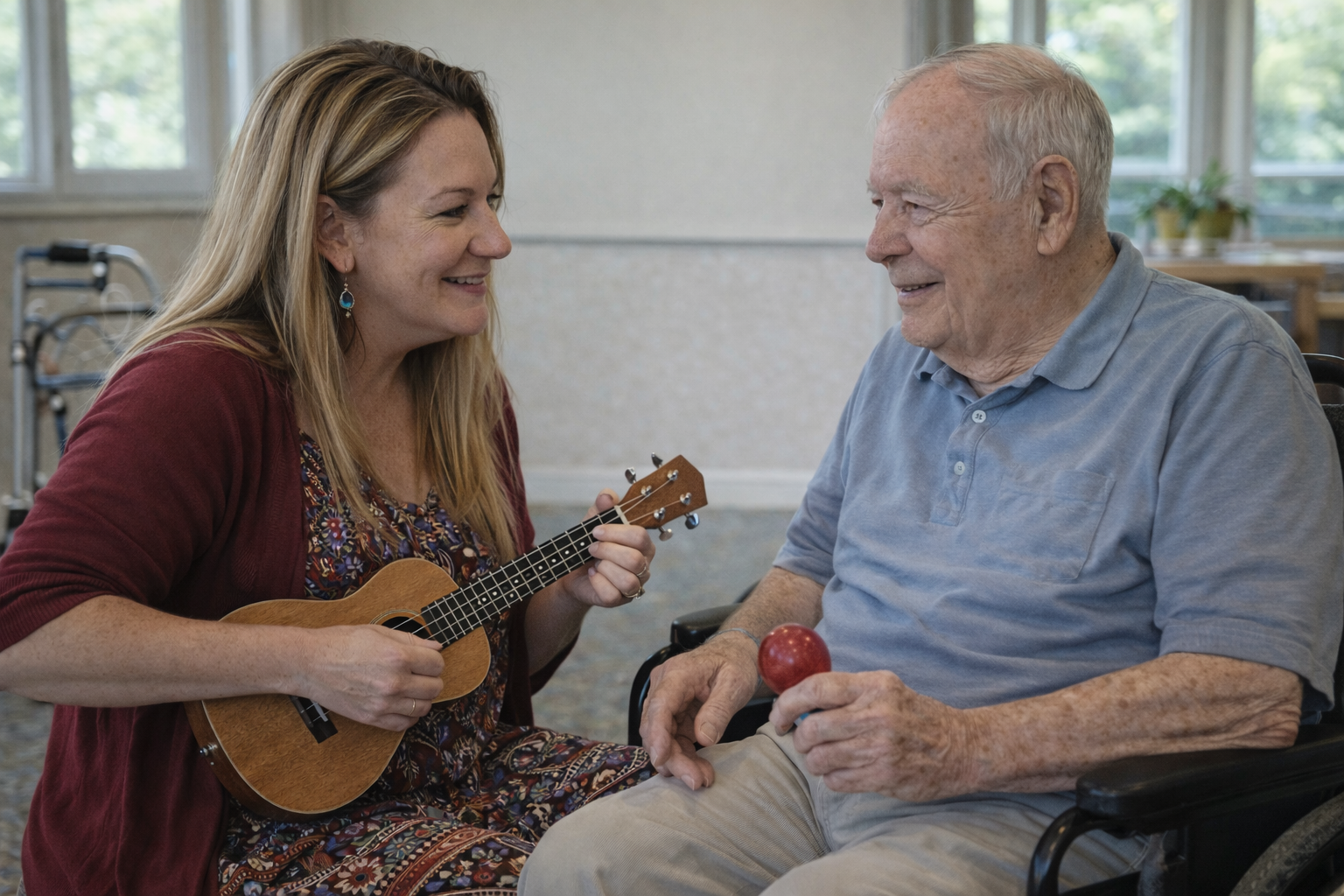
When participants spend hours disengaged or agitated, you're not just dealing with difficult days. You're missing windows where they could be more alert, more connected, and easier to care for. Generic activities that produce no response aren't neutral — they reinforce withdrawal and leave your staff managing behavioral challenges that could be prevented.
What changes: Participants who are typically withdrawn start tapping along. Residents who usually get agitated stay visibly relaxed. People who never make eye contact smile and look at their peers. Your staff stops bracing for problems and starts seeing genuine connection.
Visible relaxation — deeper breathing, softer shoulders, reduced agitation that lasts hours after the session.
Familiar songs trigger recall and conversation that carries into mealtimes and activities.
Smiling, singing along, positive energy that staff notice throughout the afternoon.
Eye contact, interaction with peers, conversations that wouldn't happen otherwise.
When participants are calmer and more engaged, your staff's job gets easier.
Everyone engages at their own level — no pressure, no performance demands.
Each 45-60 minute session uses familiar songs and rhythms that participants recognize. I watch for subtle signals — when someone's getting overwhelmed, when the group is ready for more energy, when someone needs predictability to feel safe. Then I adjust in the moment.
"I can actually see my participants breathing easier during your sessions — and they stay calmer for hours afterward."
What makes it work: I notice the micro-expressions and tension patterns that signal what participants need, then shift the tempo, volume, and style to meet them where they are. It's not one-size-fits-all — it's real-time adjustment based on what I see happening in the room.
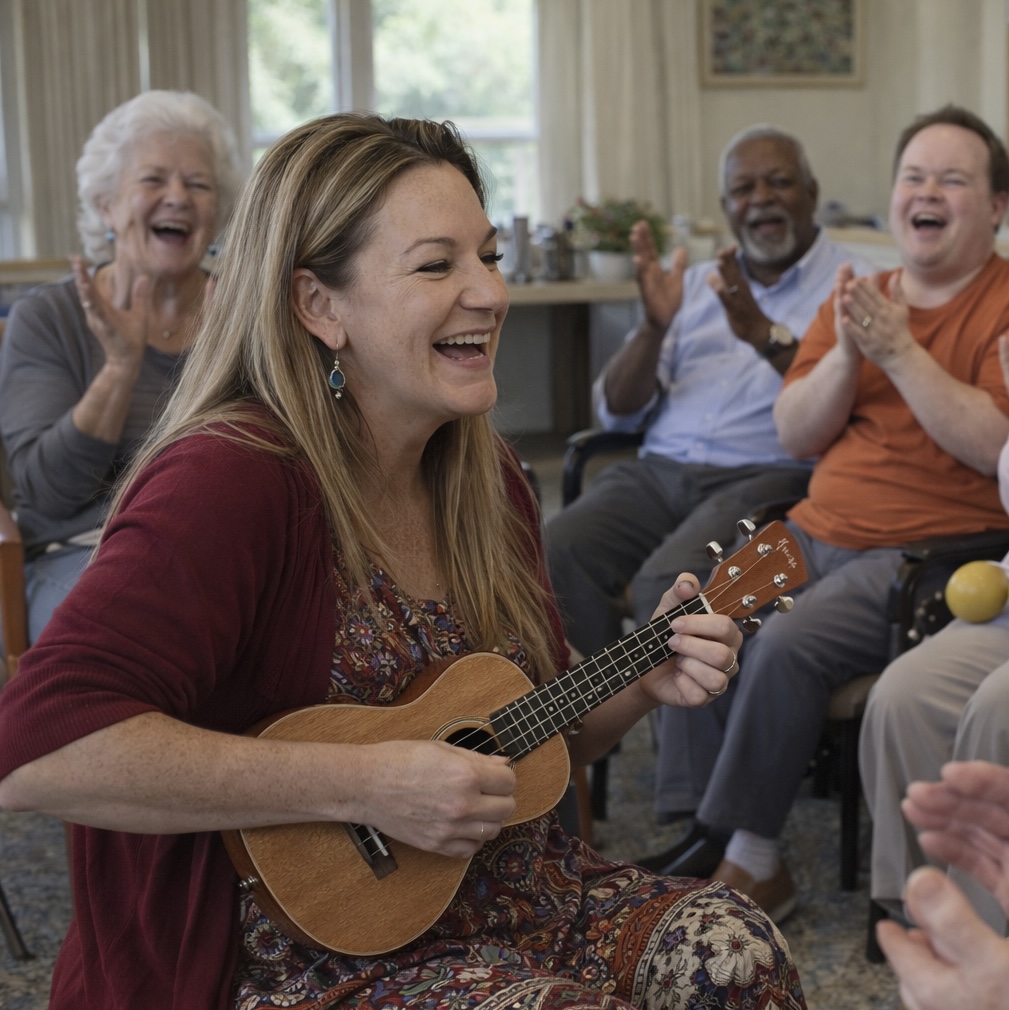
The residents who zone out during activities. The ones who get agitated by loud sounds. The participants your staff struggles to engage because nothing seems to reach them.
What changes: The resident who usually withdraws is tapping along. The participant who typically shows agitation is visibly relaxed. The person who never makes eye contact is smiling at their peers.
This happens because the music automatically adjusts to what participants need. When someone shows signs of overwhelm, the tempo slows and volume softens. When the group is ready for more, the energy builds. When someone needs predictable rhythms to feel safe, they get them.
Being realistic: Not every participant will connect with music — and that's completely normal. Some people simply don't respond to musical interventions. What matters is that the majority who do engage experience visible improvements, and the calmer group energy benefits everyone in the room, including those who don't actively participate.
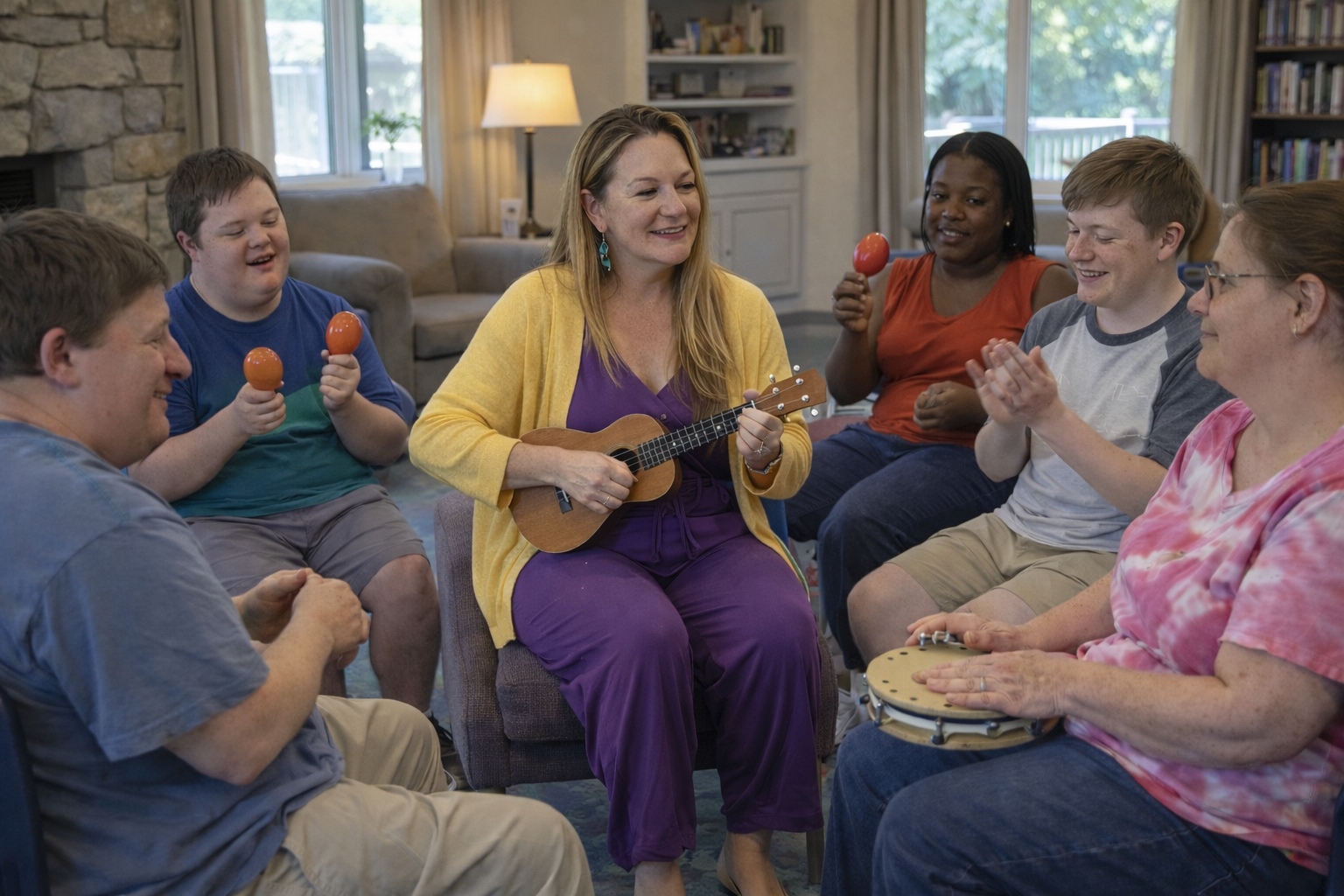
Every facility has unique populations with specific therapeutic needs. Before discussing programming details or pricing, I want to understand your participants, your current challenges, and your quality of life goals.
During our conversation, we'll discuss:
I bring all equipment, handle setup and breakdown, and work around your schedule. You provide the space; I handle everything else.
What's included: All instruments and equipment, flexible scheduling, consultation before the session to understand your participants' specific needs, and professional delivery that integrates seamlessly with your program.
Every facility has different needs. Before discussing programming or pricing, I want to understand your participants and what challenges you're facing.
Schedule a free 30-minute consultation to discuss how music programs can help your residents stay calmer, more engaged, and more connected.
SCHEDULE FREE CONSULTATIONQuestions? Email me at Melanie@MelanieStark.com